Tuesday, November 28, 2006


A Start-Up Fueled by Star Power

With Hollywood Help, Morgan Freeman's Movie-Download Site Is Set to Battle Apple

Morgan Freeman and his business partner, Lori McCreary, combined their Hollywood connections and tech savvy to build ClickStar.


By Frank Ahrens

Washington Post Staff Writer
Wednesday, November 29, 2006; D01

SANTA MONICA, Calif. -- You expect to see Morgan Freeman up on the big screen, playing sagacious older men in such films as "The Shawshank Redemption."

So what is Freeman doing, at 69, hanging out with the digital hipsters and starting a movie-download business, set to launch this week?

"It seemed like a good idea," the actor said by telephone.

The distribution of movies over the Internet is a concept that's interesting enough to have grabbed the attention of Apple's Steve Jobs, the big movie studios and more than 250 others who have started some form of video-download business this year.

But whether Freeman's idea is a good one is open to debate. His venture, called ClickStar, will operate much like others that are struggling to make a name for themselves. And it's unclear whether Freeman -- with his connections to Hollywood stars and studio heads who are looking for digital distribution methods -- will be able to overcome the hurdles that have kept consumers from widespread adoption.

Apple, which already had success with music and TV-show downloads at its iTunes Store, added movies in September priced as low as $10. And even though it has sold 500,000 downloads since then, it has only a little more than 100 titles available -- all from Walt Disney Co., where Jobs sits on the board of directors.

Movielink and CinemaNow, which are backed by the major Hollywood studios, offer libraries of thousands of movies but charge prices comparable to a DVD purchase, a move meant to appease retailers such as Wal-Mart, which deliver brisk DVD sales. Neither service releases numbers, but analysts have gauged their impact as minimal.

And then there are the issues of slow download times -- as long as two hours for one movie -- and playback restrictions that have hampered consumers from watching downloaded movies on their TV sets. Apple is expected to introduce early next year a device that moves movies from the computer to the TV.

With Freeman's ClickStar, users will be able to purchase a movie for about $20 and watch it on the computer or, with the help of an add-on device, a TV set. And ClickStar users can start playback while the movie is still downloading.

Studies have found that consumers are turned off by that type of pricing. But could they be swayed if Freeman addressed some of their other concerns, such as download times, ease of use with other home electronics and a buy-in from Hollywood studios?

The Oscar-winning actor owns a small Santa Monica movie studio called Revelations. About four years ago, his longtime business partner and a former computer scientist, Lori McCreary, warned him that the movie industry could soon be facing the same Internet piracy problems that were plaguing the music industry.

"Morgan gets technology well enough to see where it's going," McCreary said.

Freeman demurred: "I'm sort of a go-a longer."

The business was built on the strengths of the two: McCreary's technology background and Freeman's Hollywood connections.

After talking to his many actor, director and studio-head friends, Freeman knew creative types were terrified by Internet film piracy. "[Steven] Spielberg had expressed incredible fear of [Internet downloads] because his movies are stolen all the time," Freeman said.

Freeman and McCreary made a short film to explain ClickStar, emphasizing the piracy protections built in. He then invited Hollywood hotshots to ClickStar's Santa Monica headquarters, a top-floor loft space in a modern building a block from the Pacific Ocean.

"We've had just about everybody down here," Freeman said, ticking off names -- actors such as Tom Hanks, Clint Eastwood, Danny DeVito and Pierce Brosnan, and studio chiefs such as News Corp. President Peter Chernin. Inside the loft, Freeman and McCreary built a living room with a big-screen TV and a couple of furnished bedrooms with computers. The idea was to get the Hollywood types into a comfortable, familiar setting so they could see how the product worked. It worked well enough to woo a couple of studios into joining ClickStar's launch.

Freeman and McCreary also recognize that consumers have to find ClickStar easy to use. Windows Media Center computers that use the Viiv (rhymes with "five") technology by Intel -- which is a principal investor in ClickStar -- will automatically display the service for downloads and playback on PC or TV. Also, DirecTV's new high-definition set-top boxes will come ClickStar-ready. Others will be able to access the service on the Web at http://www.cstar.com and watch the movies on a PC.

ClickStar's chief executive, James Ackerman, said users should initially expect a library of 600 to 1,000 movies from two or three major studios (that he would not name) and some indie studios. The company will also offer a documentary channel hosted by DeVito and a classic-movie channel hosted by Peter Bogdanovich, both of which launch Friday.

The first new feature-length film available for purchase on ClickStar will be "10 Items or Less," a film Freeman produced and stars in, set to be released simultaneously in theaters and on ClickStar on Dec. 15.

But is this enough for consumers to grasp downloads as a way to get movies?

The Diffusion Group, a Texas research outfit that conducted two recent studies on the viability of the movie-download business, found that nearly one-quarter of households with high-speed Internet would be willing to pay $10 to download a movie to watch on a home PC or video iPod. The percentage drops sharply as the price goes up. At $20 per movie -- about the price of a new movie on DVD -- only 12 percent said they'd pay.

The study asked the same users: If you could download a movie from the Internet for $10 but had to pay extra for a set-top box that would let you watch it on your television, would you still do it? If the box costs $200 to $300, 23 percent of all respondents said yes, the study found.

Alarmingly for businesses like ClickStar, however, when the hypothetical price of a movie rises from $10 to $20 to $25 and the set-top unit costs extra, the percentage of consumers willing to pay extra to watch it on TV falls off the table, statistically speaking.

Kevin M. Corbett, vice president of Intel's digital home group, said he thinks ClickStar and iTunes can find a sweet spot for pricing that will create a viable business. He was relieved, not upset, when Apple beat ClickStar to the movie-download business using a variation of ClickStar's model.

"I'd hate to be in conflict with someone as big and influential in media as Apple when we're trying to build a market," he said.

The New York Times
Printer Friendly Format Sponsored By


November 29, 2006

Wal-Mart Plans to Test Online Films

The decade-old DVD moved two small steps closer yesterday to technology’s endangered-species list.

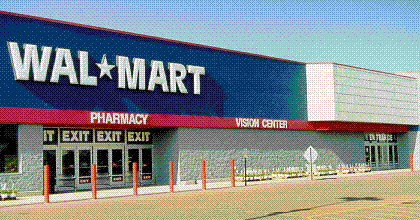
Wal-Mart, the country’s largest seller of movies, announced that next year it will begin testing a video download service on its Web site. Wal-Mart did not reveal its partners, but media executives involved in the deal said that all the major studios are either on board or in active talks with the retailer, and that Hewlett-Packard is providing the technology for the download site.

In another sign that the race to put video content online is accelerating, the Internet firm BitTorrent, once a pariah for enabling vast unauthorized video file-sharing, plans to announce today that it has struck distribution deals with eight media partners, including 20th Century Fox, Paramount and MTV Networks.

Beginning in February, the companies will begin selling TV shows and movies through BitTorrent’s Web site, bittorrent.com.

It is a strange juxtaposition: BitTorrent, with 35 employees, and the company whose dominance in video sales is so threatened by online file trading, 1.8-million-employee Wal-Mart.

DVDs are not going away any time soon. A vast distribution system is still built around them, and downloading can still be slow and cumbersome. But the latest steps show that studios and retailers have concluded that the future of home-video sales lies online.

That conviction has been reflected this year in a flurry of deals; Apple, Google, Amazon and AOL have all rolled out video stores. Apart from Apple’s iTunes, the online stores have enjoyed limited success so far, but that has not stopped the momentum.

Media companies have even become willing to strike partnerships with firms whose popular technology is primarily used for trading unauthorized content. For example, YouTube, the video sharing site now owned by Google, reached rights agreements with the music labels Universal Music Group, Sony BMG, and some TV networks — despite the relative freedom users had during YouTube’s early days in uploading and watching copyrighted material.

The media companies are not only attracted to the large online audiences of companies like BitTorrent, but also want to enlist their support in eradicating unauthorized content. The media companies in the BitTorrent deal say that the Internet firm has pledged to police its network for illegal trading.

“They are making a big commitment to us to filter the site,” said Jamie McCabe, executive vice president at 20th Century Fox. “When anything is up there that is not legitimate, they’ve pledged to take it down.”

For now, at least, the move by Wal-Mart, which accounts for 37 percent of the country’s video sales, is likely to make the larger splash.

Though its video download store will officially open for business next year, Wal-Mart took a tentative first step yesterday. Customers who buy the physical DVD of Warner Brothers’ “Superman Returns” in a Wal-Mart store will have the option of downloading a digital copy of the film to their portable devices for $1.97, personal computer for $2.97, or both for $3.97.

The dual approach, marrying downloads to the purchase of an actual DVD in the store, reflects the retailer’s commitment to protecting its bottom line. “We feel like it is really important that the DVD business stays healthy and stays quite central to consumers’ lives,” said Kevin Swint, a divisional merchandising manager at Wal-Mart.

Not every movie studio has yet formally signed onto Wal-Mart’s effort. According to two studio executives involved in the negotiations, some studios are grappling over the extra charge of $1.97 to $3.97 for DVD buyers to download the movie. Some studios feel that it would be better to provide the downloads free to DVD buyers, making them clearly a promotion, so that those prices do not become fixed in customers’ minds as the going rate for movies online.

While Wal-Mart’s coming effort might get more scrutiny, BitTorrent’s approach to selling video online represents a more radical departure from current video stores on the Web — and an attempt to fix some of the problems that have plagued online video purchases, like excruciating download times.

BitTorrent’s founder, Bram Cohen, 31, introduced the network in 2001 at the height of the legal battles over Napster, the peer-to-peer pioneer. His service was remarkably efficient; when a user tries to download a media file, the network fetches pieces of that file from the computers of nearby users on the network and reassembles them on the user’s computer.

Fat video files that might take over an hour to download over iTunes can take just minutes over BitTorrent if other, nearby users have the file on their hard drives.

BitTorrent’s software currently sits on 80 million computers, and Internet service providers say that file trading on the service — most of it illegal — now accounts for 40 percent of all online traffic.

The company, which incorporated in 2003 and raised $9 million in venture capital, has recently gotten more serious about policing its network. Last year, it reached a deal with the Motion Picture Association of America to remove infringing content from the search index on its Web site. And in May, Warner Brothers agreed to sell its TV shows and movies through BitTorrent’s network, though the effort was delayed until more partners were enlisted.

Other partners in the deal to be announced today include Lionsgate, the technology cable channel G4 and Starz Media, a programming production and distribution company owned by Liberty Media.

Ashwin Navin, BitTorrent’s president, said that as the firm built a business in authorized distribution, it viewed piracy as a competitive threat. So it plans to build a more attractive alternative that will convert its traditional users while luring those who have not yet waded into the world of digital downloading, he said.

In the new service, BitTorrent’s partners will upload authorized versions of their TV shows and films onto the network. No pricing details have yet been announced. Files will be protected by Microsoft’s content management system, and files will play right inside the user’s Web browser. Users who buy content will have to enter a special encryption key before watching the movie, and they will only be able to view it on two computers — say, a desktop and a laptop they might bring with them on a business trip.

Mike Goodman, an analyst at the Yankee Group, says networks like BitTorrent shift bandwidth costs to users. “You can argue that peer-to-peer will ultimately be the cheapest way to distribute this content,” he said.

Studio executives agree, and think BitTorrent will take its place alongside the giants like Wal-Mart in the emerging digital download world.

“I think everyone is going to do a BitTorrent deal,” said Thomas Lesinski, president of Paramount Pictures Digital Entertainment. “You have to be in a position where you make your content available everywhere the consumer is interested in downloading it.”

The New York Times


November 28, 2006
Advertising

Old-School Sponsorship From a Digital-Era Company

MATCHMAKER, matchmaker, make me a match. So sang the daughters of Tevye in “Fiddler on the Roof.” For a TV comedy series that begins tonight — about a young woman’s dating life, appropriately enough — Madison Avenue is playing matchmaker, bringing together an advertiser and a network for an elaborate sponsorship deal.

The matchmaker is MediaHub from Mullen, the media planning and buying division of Mullen, an agency owned by the Interpublic Group of Companies. MediaHub is hooking up Match.com, the dating Web site operated by IAC/InterActiveCorp, with the TBS cable network for a season-long sponsorship of the new sitcom, called “My Boys.”

Under the agreement, estimated at $1 million to $2 million, Match.com will be featured in all 13 episodes of “My Boys,” which chronicles the adventures of a twentysomething who covers sports for a Chicago newspaper as she juggles her career and social life. The Web site will be featured prominently in two episodes and play cameo roles in the rest.

Other elements of the deal include identification of “My Boys” as “sponsored by Match.com” in a television, print, radio and online promotional campaign that TBS is creating for the series; the posting of a profile of a character from the series on Match.com; billboard-style ads for Match.com on a special “My Boys” Web site (tbs.com/shows/myboys/); and a discussion of “My Boys” and Match.com during an episode of another TBS show, “Movie and a Makeover.”

The sponsorship is another example of an advertising technique that is being revived, decades after fading from the media landscape. Known as branded entertainment, it recalls the days when announcers intoned at the start of TV and radio shows that they were being “brought to you by” some name-brand consumer product.

Branded entertainment is returning to television because of its ability to interweave product pitches into the story lines of the shows that consumers want to watch. The goal is to counter viewers’ increasing ability to ignore or avoid more interruptive advertising like traditional commercials.

Among other advertisers that are taking part in the revival of branded entertainment are Coca-Cola, General Motors, Philips Electronics North America, Procter & Gamble and Unilever.

In some instances, they are even getting marquee billing in the names of the shows they are sponsoring, a throwback to the era of “Schlitz Playhouse of Stars” and “The United States Steel Hour.” For example, the AMC cable network announced yesterday the creation of an ad package to be called the “Lincoln Friday Night Feature,” sponsored by the Lincoln Mercury division of the Ford Motor Company.

“After two years of successful TV advertising, buying a lot of syndicated shows like ‘Seinfeld’ and ‘Friends,’ this is, for us, stepping it up,” Jim Safka, chief executive at Match.com in Dallas, said of the agreement with TBS.

“It’s a fully integrated campaign that feels less like a sponsorship or advertisement and more like a part of the program,” he added.

In threading Match.com through the episodes of “My Boys,” Mr. Safka said, “it has to feel seamless and natural,” otherwise it could annoy or even alienate viewers.

Doing more than what the deal calls for “would be heavy-handed,” Mr. Safka said, “and it’s not how our brand fits into someone’s everyday life.”

“It’s taking some risk,” he added, “but we’ve had a good preview of the show and we think it’s going to deliver the goods.”

MediaHub made the deal for Match.com during the recent upfront market, where advertisers agree to spend money with networks before the start of the fall season.

John Moore, senior vice president and group media director at MediaHub in Wenham, Mass., said the agreement made sense because Match.com wanted to promote a brand identity as a Web site for “long-term relationships, not casual dating, and ‘My Boys’ is about a group of friends going through the trials and tribulations of trying to figure out long-term relationships.”

“The characters are a reflection of the people on Match.com,” he added. The creative agency for Match.com is Hanft Unlimited in New York.

This is the first time MediaHub has signed a season-long sponsorship for a client, Mr. Moore said, and the deal is not without its challenges.

“The ‘leap into the void,’ ” Mr. Moore said, “is this show has no track record,” unlike TBS shows like “Sex and the City,” which are reruns of series that proved successful on other networks.

“But we think the rewards outweigh the risks,” he added, because “TBS is giving ‘My Boys’ its most coveted time slot, after ‘Sex and the City,’ ” and because of the pedigree of the production team behind “My Boys.”

Among those involved in the production of “My Boys” are Jamie Tarses, the TV executive who is the basis for a character on the NBC series “Studio 60 on the Sunset Strip,” and Betsy Thomas, who has worked on series like "My So-Called Life," "Then Came You" and "Run of the House."

TBS was “looking for a launch partner, if you will, for ‘My Boys’ that would be a like-minded brand,” said Linda Yaccarino, executive vice president for advertising sales and marketing at Turner Entertainment in New York, which like TBS is part of the Turner Broadcasting System unit of Time Warner.

Branded entertainment projects “are easier when it’s an organic fit,” Ms. Yaccarino said. “Otherwise you’re just going to turn off the viewer, and then all of your work was for naught.

“As long as we respect the creative process, and that takes the lead, that’ll keep the viewers watching.”

The deal is “the biggest co-branded effort that Turner has ever done,” Ms. Yaccarino said, “and I think you’ll definitely see more of this.”

Early reviews of “My Boys” are mixed to positive. In Touch magazine gave it two stars out of four, while a sibling magazine, Life & Style, gave it two and a half (“Worth a first date at least”). Life magazine called it “fresh” and the critic Matt Roush, in TV Guide, praised it as a “winner.”

Monday, November 27, 2006


Hello, Cellphone? YouTube Calling

Verizon Deal Is Latest to Link Voice, Video Firms

By Yuki Noguchi
Washington Post Staff Writer
Tuesday, November 28, 2006; D01

Internet video service YouTube is going mobile for the first time, launching a television-like channel featuring its most popular videos on Verizon Wireless cellphones.

Verizon Wireless is hoping to parlay YouTube's reputation as the premiere Web site for posting and sharing homemade videos into success for its own mobile-video service by delivering YouTube clips to subscribers of its premium V Cast service starting next month.

The deal, to be announced today, is one of many initiatives in the past two years that try to make the mobile phone a more appealing entertainment device -- and to gin up excitement around mobile video services, for which carriers typically charge at least $15 a month.

The relatively expensive premium for mobile video service has limited its appeal to a small but growing minority, analysts say. Yet what began as an obscure technical experiment has become a bigger test of whether mainstream consumers want portable video enough to pay extra for it.

Three years ago, when Sprint (now Sprint Nextel) launched the first mobile television service on its phones, it looked more like a color slide show than a miniature facsimile of the tube -- and sales of the service were virtually nonexistent. Since then, carriers have sped up their networks, phonemakers have developed devices with bigger, better screens, and people are starting to watch short clips of news, sports and even TV shows on the go.

Although mobile television has made big strides in technology and quality, it remains an open question whether the service will ever become standard the way custom ring tones and text messaging have, said David Joyce, an analyst with Miller Tabak, an investment firm.

"It's not a replacement for regular television viewing; it's a convenience thing," and it's unclear how many people will care enough to pay for that, he said. As monthly bills for various entertainment and communications services stack up, many consumers might start opting out of additional premium services, he said.

The industry has already chalked up one failure. ESPN Mobile, which was launched in January as a premium service offering sports video clips and a television-like experience, announced in September that it would shut down after too few subscribers were willing to pay for the fancy phone and a monthly premium ranging from $35 to $250.

But that hasn't dampened the enthusiasm of carriers and content providers, who announced a flurry of other cellphone-video deals this year.

HBO reformatted entire episodes of shows such as "Sex and the City" and "Curb Your Enthusiasm" for cellphones, while creating made-for-mobile spinoffs of "Entourage" and other shows. Sprint Nextel launched a deal with the National Football League to rebroadcast video highlights of games, as well as a pay-per-view deal to stream full-length movies over the air. Amp'd Mobile, a cellphone service targeting a young, edgy demographic, produces sports and comedy clips, including a political cartoon called "Lil' Bush."

Now, about 2 percent of the country's 220 million cellphone subscribers pay to receive video on their phones, said Roger Entner, an analyst with the research firm Ovum.

Believers in mobile television say much of the market remains untapped.

"There's still a majority of the wireless subscriber base that is still uninformed about mobile TV service; right now, I think the biggest barrier is consumer awareness," said Ray Derenzo, vice president of business development for MobiTV, a subscription service that delivers broadcast television to subscribers of Cingular Wireless and Sprint Nextel.

In the past 18 months, carriers and major media brands have shown keen interest in experimenting with mobile formatting, in part to test the waters to make sure the technology actually works, Derenzo said.

Faster technology is also in the works.

Sprint is experimenting with a speedier transmission technology called WiMax. And Verizon Wireless plans early next year to launch mobile video technology made by Qualcomm that will broadcast video clearer and faster.

Although relatively few phone users view video on their small screens, video is contributing a large part of the $15 billion in annual revenue that carriers are collecting from data services, Entner said. The revenue is why carriers keep casting around for more video services to expand their appeal. "They're trying to fill the channel with more and more -- they need to expand the lineup," he said.

That is the goal for YouTube's mobile service, which will start in early December and create a new video channel for V Cast subscribers. Verizon Wireless launched V Cast in February 2005 with specially produced episodes of soap operas and a one-minute spinoff of the hit TV show "24." While the company does not disclose the number of V Cast subscribers, 20 million Verizon Wireless subscribers now have video-capable phones, a significant number of whom pay $15 a month to access V Cast, said Robin Chan, associate director of marketing for the carrier.

The YouTube deal is exclusive to Verizon Wireless for an unspecified length of time. Wireless phones are already important to YouTube, because many people use them to record and post videos to the site, said Steve Chen, co-founder and chief technology officer of YouTube, which was purchased last month by Google. "We don't want to be restricted to the desktop," Chen added.

Analysts say the pricing of mobile video ultimately will affect its future. Over time, carriers are likely to turn to advertising to subsidize it or will lower prices to about $10 a month to get more people to sign up, Entner said.

"In five years, it will be standard," he predicted.

The New York Times
Printer Friendly Format Sponsored By


November 27, 2006

The Air Is Free, and Sometimes So Are the Phone Calls That Borrow It

SAN FRANCISCO, Nov. 26 — Gary Schaffer looked out his window here last week to discover a reporter standing on his lawn, pirating his wireless Internet access to test a new mobile phone.

The phone, made by Belkin, is one of several new mobile devices that allow users to make free or low-cost phone calls over the Internet. They are designed to take advantage of the hundreds of thousands of wireless access points deployed in cafes, parks, businesses and, most important, homes.

The technology’s advocates say that as long as people are paying for high-speed Wi-Fi access in their homes, they should be able to use it as a conduit for inexpensive calls and an alternative to traditional phone service.

But, in a twist that raises some tricky ethical and legal questions, the phones can also be used on the go, piggybacking on whatever access points happen to be open and available, like that of Mr. Schaffer.

A retired business teacher, Mr. Schaffer seemed affably cautious about the idea of having his bandwidth borrowed.

“If you’re a friend, I’d say, let’s give it a try,” he said. “If you’re a stranger, probably not, unless you had to make an emergency call.”

The call made from Mr. Schaffer’s lawn went through but was quickly disconnected, apparently because of a weak signal. Mr. Schaffer did not seem to feel he owed any apology for the spotty coverage, though he did express concern for the person on the other end of the line.

“I know what it’s like to have a call dropped,” he said.

For all its limitations, the technology is starting to emerge commercially, with companies like Vonage, Skype (owned by eBay) and T-Mobile (a unit of Deutsche Telekom) now selling or supporting mobile devices that use Wi-Fi networks.

In some cases, the voice service is free. A Belkin phone that works with the Skype calling service costs about $180; calls to Skype users on computers are free, as are outgoing calls to domestic phone numbers, at least through the end of the year. Incoming calls from phones cost extra. Vonage charges $90 for a phone and $15 a month for 500 minutes of talk time.

One big hurdle is that the Wi-Fi radio frequency spectrum is unlicensed and not maintained by any one company, so call quality can be unreliable. Moving a few yards can require finding a new network to connect to. In other words, when you place free or low-cost calls — especially on a stranger’s network — you sometimes get what you pay for.

“There are a lot of dropped calls,” said Roger Entner, a telecommunications industry analyst with Ovum Research. But he said the new technology had at least one impressive ability: getting people to appreciate their old-fashioned cellular service.

“Everybody who tries a Wi-Fi phone will get down on their knees and thank the wireless phone people for the good job they’ve done on coverage,” he said.

Wi-Fi is also a power-hungry technology that can cause phone batteries to die quickly — in some cases, within an hour or two of talk time.

“When you turn on the Wi-Fi it does bring the battery life down,” said Mike Hendrick, director of product development for T-Mobile. But he said the technology was improving rapidly.

T-Mobile is letting customers in Seattle participate in a test of phones that can switch between its mobile network and Wi-Fi. The company is betting that this flexibility will come in handy if the customer is out of the network’s reach, offering another way to get online and stay connected.

More generally, the technology could threaten the dominance of traditional telecommunications networks by giving people an alternative pipe for their voice and data transmissions.

But some carriers are not convinced that the technology is ready for the market.

“We can totally understand that people want even more ubiquity from cellphones,” said Jeffrey Nelson, a spokesman for Verizon Wireless. But Wi-Fi devices “aren’t where they need to be,” he said.

Mr. Hendrick of T-Mobile said the new phones were good enough to provide an alternative.

“If you can’t get access because you’re buried in the basement of a metal-encased building, you can go to an open wireless network,” he said. Or it could be useful “if you’re out in the suburbs, in the basement, and you have Wi-Fi in the house.”

But what if you’re just on somebody’s lawn? How do people feel about a passer-by using their bandwidth to place free phone calls?

For his part, Mr. Schaffer said he would mind only if it had an adverse effect on him — which in theory it could, if the voice data caused congestion on his network. There is no clear indication to a network’s owner that a phone call is taking place, so most will not have the chance to object.

Not everyone is so open to walk-by talkers. “I don’t like it,” Kevin Asbra, another San Franciscan, said. “It’s an abuse of the system. I pay my bills. Why should you call for free?”


New types of mobile phones, like this model from Belkin, can locate and tap in to the growing number of wireless access points to the Internet, just as laptops with Wi-Fi do. Once connected, the user can make phone calls as usual, but signal strength can vary.

His wife, Karen Seratti, begged to differ. A Web site usability tester, she says she regularly looks for open access points so she can check e-mail when she is traveling or away from the office.

“I walk around with my Mac all the time looking for access,” she said. “When you have to send an e-mail, you have to send an e-mail.”

Sometimes she must scavenge from within her own house, as when the family’s Internet connection goes down. She offered a neighborly tip: “Walk into the alley — you can find the network called Fido265.”

Finding an open access point might prove challenging in some places, but not in San Francisco, where the spread of Wi-Fi networks has outpaced even that of yoga studios and organic produce shops.

In a walk through the Inner Sunset district, a phone’s display showed that most wireless networks in range were protected, requiring a password for access.

There were, however, enough unsecured ones that it was possible to get online every half a block or so. Because the Wi-Fi phone looks like a standard cellphone, it is much less conspicuous than a laptop on the street. The proliferation of Wi-Fi laptops and, in turn, hunters of free Internet access has already raised questions about whether borrowers of bandwidth are breaking any laws.

“There’s a big debate going on right now,” said Jennifer S. Granick, executive director of the Center for Internet and Society at Stanford Law School. Ms. Granick said some people believed that using a connection without permission constituted unauthorized access to computers, which is a crime, while others disagree.

Traditional analogies are hard to come by, she said, adding that she does not believe using Wi-Fi is the same as trespassing, since the signals travel beyond property limits. “People say that you can’t go inside somebody’s house; but I say, you can sit outside and listen to the radio,” Ms. Granick said.

She added that the situation was different when the owner of a wireless network chose to require a password. “If it’s secured, it’s marked as off-limits,” she said.

Alex Milowski, an executive at a technology start-up who was out for a walk last week with his infant son, Max, said that it was fine for Wi-Fi phone users to jump onto an open network. Would he teach Max that swiping bandwidth without permission was O.K.?

“By the time he’s worried about it, access will be free,” Mr. Milowski said.